Zoom whitening or store-bought strips: what actually changes the colour
The idea behind both is similar. The difference is control, speed and who protects your gums.
October 17, 2026 · 4 min read
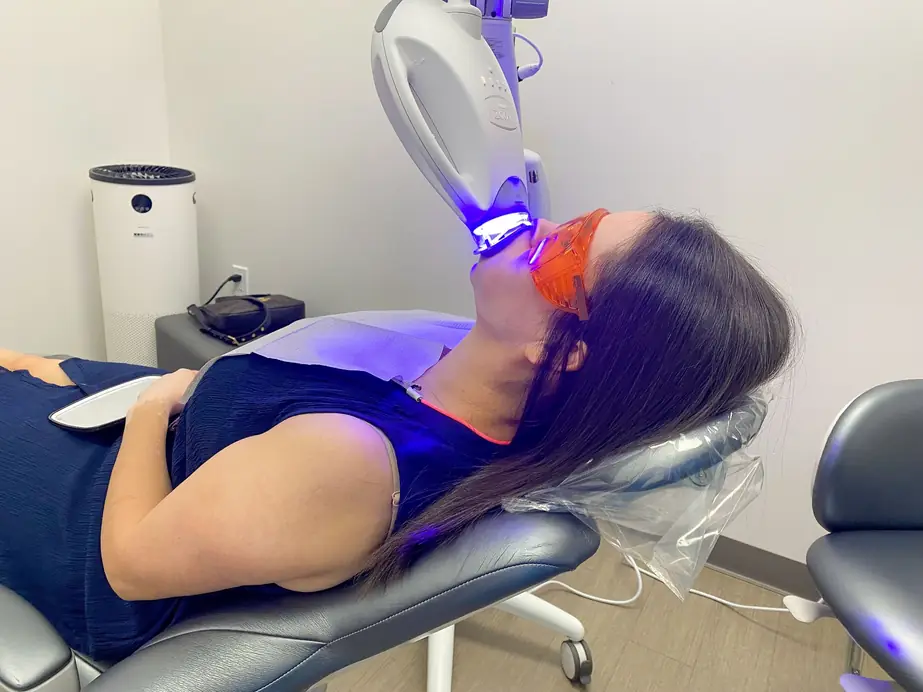
Walk down the whitening aisle and every box promises the same bright result. Some deliver a modest change, a few disappoint, and none of them can see your teeth before they start. Meanwhile your dentist offers an in-office option that looks, from the outside, like the same thing at a higher price. So what is actually different? Here's a plain account of what changes tooth colour, and where the two approaches part ways.
Why teeth darken in the first place
Coffee, tea, red wine and tobacco are the usual suspects, and age plays a part too, because enamel wears thinner over time and shows more of the yellower layer underneath. Some staining sits on the surface and some settles deeper. That mix is why two people who drink the same coffee can end up with very different shades, and why one person's strips work better than another's.
What actually changes the colour
Whitening products usually rely on a peroxide-based gel that breaks down stain molecules inside the enamel. Three things decide the result: how strong the gel is, how long it stays in contact with the tooth, and how evenly it covers every surface. That last one is where strips struggle. They're flat, and teeth aren't. Crowded or rotated teeth leave patches the strip never touches, and gel that creeps onto the gums is a common reason people quit halfway through.
That doesn't make strips useless. For mild, recent surface staining, a patient routine over a couple of weeks can be a reasonable place to start. The trouble comes when someone expects strips to do a professional treatment's job and then blames their own teeth.
What a Zoom visit looks like at Superior Smiles
Superior Smiles Dentistry offers in-office Philips Zoom whitening. You settle into the chair in protective orange goggles, your gums are isolated so the gel stays where it belongs, and the Zoom light is positioned over your teeth while the whitening gel works. The visit is done chairside in one appointment. Zoom products are also kept at the front desk. The exact timing and number of rounds are Dr. Kaur's call and depend on your teeth, so ask when you book.
The real advantage isn't the light, in the end. It's supervision. Someone checks that every surface is covered, protects the soft tissue, and stops if something doesn't feel right. With a box of strips at home, you're doing all of that yourself.
Sensitivity, honestly
Temporary sensitivity is common with any whitening, in-office or at home. You may notice a zing with cold air or a cold drink for a day or two. If your teeth are already sensitive, or you have gum recession, tell the team before you start so they can plan around it. Many dentists suggest a sensitivity toothpaste and skipping very cold or very hot drinks for a short while. If discomfort lasts longer than you expected, call the office instead of waiting it out.
What whitening can't do
Whitening works on natural enamel. It doesn't change the colour of crowns, veneers or fillings, so a tooth with old work can stand out once the rest lightens. That's the reason the order matters if you're also planning cosmetic work: whiten first, then match any new restoration to the shade you end up with. Whitening also isn't a substitute for a check-up. Decay and gum problems should be treated before bleaching, because gel on an untreated cavity is uncomfortable and solves nothing.
Keeping the result
Fresh enamel is more receptive to stain for a short window after treatment, so the first couple of days count. Dentists commonly advise steering clear of dark, staining food and drink during that period. After that, the habits are simple:
- Sip coffee, tea and red wine through a straw when you can, and rinse with water afterwards.
- Brush twice a day and clean between your teeth, because plaque holds stain.
- Keep your regular cleanings, which remove surface stain that brushing leaves behind.
- Ask about touch-ups when the colour starts to slide. Most people need an occasional refresh.
- Stop smoking or vaping if you can. Nothing undoes whitening faster.
So which one should you choose? If your staining is mild, you're patient, and your teeth are fairly even, strips are a fair first try. If you have a date coming up, uneven colour, sensitive gums, or you've tried strips and been let down, an in-office visit is worth asking about. Either way, start with a check-up so someone looks at the teeth you're about to whiten.
Call (661) 454-7600 to ask about Zoom whitening, or read the teeth whitening page for how the visit goes. If you'd rather write first, the contact page reaches the front desk.
Superior Smiles Dentistry, (661) 454-7600
Call (661) 454-7600More articles
Haven't seen a dentist in years? How to get back in the chair without the dread
A long gap is common, and a good first visit has no lecture in it.
Invisalign or braces? How a digital scan changes the first conversation
The scan comes before any sales pitch, and that order helps you decide.